
Press Enter

Neopor® GPS — the next Generation of insulation

Neopor® GPS provided by BASF is a graphite polystyrene (GPS) rigid foam insulation that gives maximum efficiency, cost-effectiveness and sustainability on construction projects. Planners, architects, contractors and builder-owners benefit from insulation made of Neopor GPS because of the special advantages this material offers.
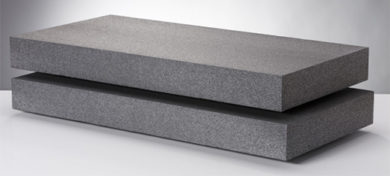
Neopor Product Big

Silver-Grey Neopor GPS is comprised of many small pockets of air within a polymer matrix containing graphite. The graphite reflects radiant heat energy like a mirror, increasing the material's resistance to the flow of heat, or R-value.

Most polymer-based foams exhibit a greater ability to slow the movement of heat as the temperature decreases. Neopor GPS is in a unique class because it increases in R-value as the temperature outside drops.
Navigate to a slide

How can graphite polystyrene insulation help build high-performing buildings with lower carbon footprints?

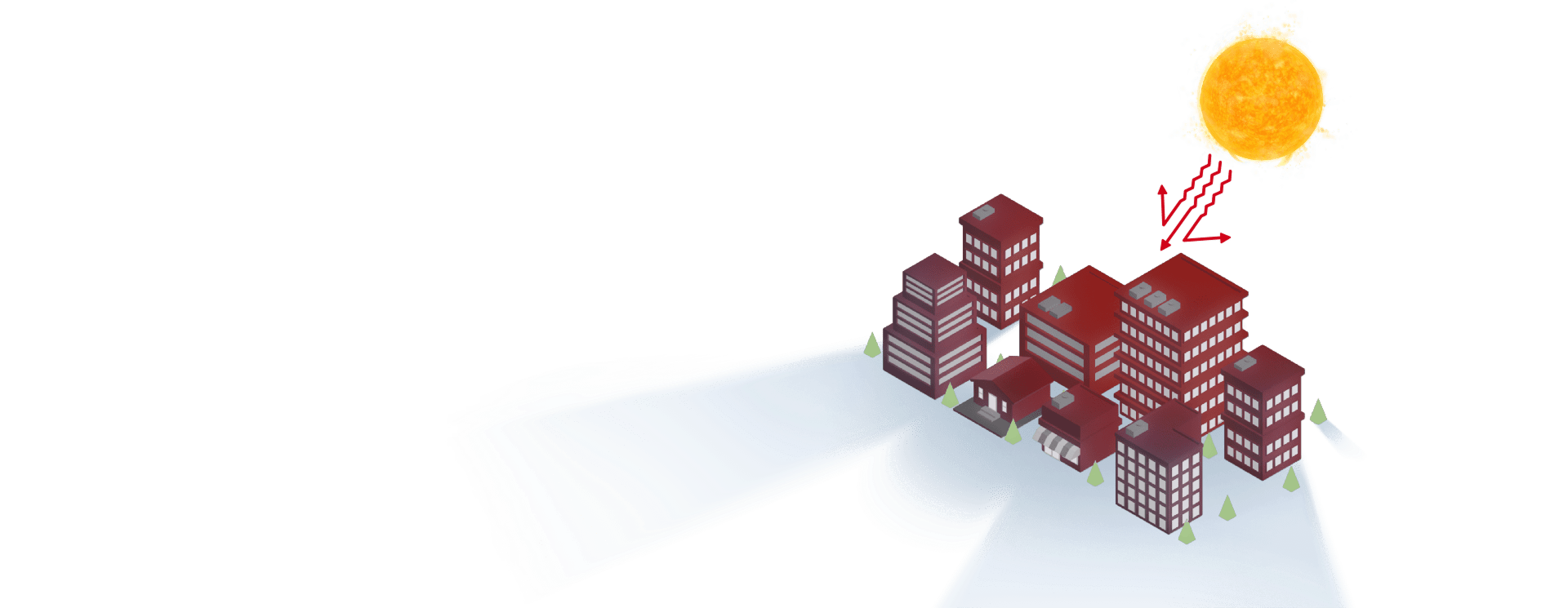
Graphite polystyrene (GPS) rigid foam insulation excels at absorbing and reflecting infrared heat energy. Click the interactive below to learn how and get an overview of its potential in low operational and embodied carbon building projects.

Graphite polystyerene (GPS) rigid foam insulation reflecting and absorbing heat for several buildings.

Graphite: A natural heat reflector

Graphite polystyrene (GPS) rigid foam insulation is made from a polymer matrix of graphite and small pockets of air. Why graphite? When used in insulation material, it has an exceptional set of benefits.

Graphite: A natural heat reflector

As radiant heat energy approaches graphite beads, they both absorb the heat and reflect it like a mirror. As a result, GPS slows heat loss through walls in winter and heat gain in summer.

Improved insulation with GPS board

Graphite makes GPS foam a powerful insulator, achieving an approximately 25% higher R-value compared to white expanded polystyrene (EPS).1 GPS can reduce the raw material used by about 20% compared to standard white EPS2, and about 30% compared to XPS.3

Improved insulation with GPS board

By combining air and graphite without blowing agents, GPS maintains its original R-value over time with no thermal drift. Plus, its performance improves in cold conditions, increasing its R-value per inch as temperatures drop.4

Energy savings for buildings

With its superior thermal performance compared to standard white EPS foam insulation, GPS can keep homes warmer in the winter and cooler in the summer, delivering energy savings, contributing to a lower operational carbon footprint, and lowering the utility bills of a building.

Energy savings for buildings

With its semi-permeable cellular structure, GPS is breathable, meaning water vapor can move through it and help mitigate the risk of mold and rot associated with condensation and water vapor inside wall cavities.5

Building resilient communities

In addition to its functional properties that can help reduce raw material and operational carbon, GPS insulation can achieve a lower embodied carbon than comparative rigid foam insulation like XPS.6 This helps architects and building owners qualify for energy efficient and low carbon funding initiatives and certifications, such as LEED.

Building resilient communities

With applications in interior and exterior walls, under slab and perimeter, and roofs, GPS insulation is key to building more resilient communities — especially when used in continuous insulation, including ICFs, EIFS, and SIPs.

Insulation with global applications

Developed and used in Europe since the 1990s, graphite polystyrene has already been part of energy-efficient, affordable, and resilient solutions in the building sector, and there are yet more to be specified.

Insulation with global applications

The performance and sustainability benefits of GPS, including its low global warming potential (GWP), make it a powerful asset in the global effort to reduce greenhouse gas emissions and meet our collective climate objectives.

Are you ready to build a more sustainable future?

Contact us to specify Neopor® GPS in your next building project.

Contact us

Sources

1 Comparing R-value of 4.7 for Neopor GPS Type 1 (ICC ESR-2784 BASF Neopor, Table 3) to R-value of 3.6 for white Styropek EPS Type 1 (ICC ESR-1498 - STYROPEK USA, INC., Table 2), this implies an approximately 25% higher R-value with GPS.
2 Materials Savings of GPS Compared to white EPS: For the same density of 0.90 pcf, 1 inch thickness, Neopor GPS Type 1 (ICC ESR-2784 BASF Neopor, Table 3) can achieve an R-value of 4.7 compared to the R-value of 3.6 of white Styropek EPS Type 1 (ICC ESR-1498 - STYROPEK USA, INC., Table 2). This implies a material saving of approximately 23% when comparing GPS to white EPS to achieve the same R-value.
3 Materials Savings Compared to XPS: Neopor GPS Type 1 has a minimum density of 0.90 pcf (ICC ESR-2784 BASF Neopor, Table 1), while XPS “Type X has a minimum density of 1.30 pcf” (ICC ESR-4755 - DUPONT DE NEMOURS, INC., Table 1). This implies a material saving of approximately 30% when comparing GPS to XPS to achieve the same R-value.
4 See “Neopor-KF2000 Brochure”.
6 Referencing Global Warming Potential (GWP) values (kg CO2-equiv. per board per m2):
  • 0.29 GWP for Neopor® BMB (GPS Type I, 15 PSI, embodied carbon of A1-A5 & C1-C4), based on EPD from EC3 Tool.
  • 2.33 GWP for standard Neopor® (GPS Type I, 15 PSI, embodied carbon of A1-A5 & C1-C4), based on EPD from EC3 Tool.
  • 7.14 GWP for FOAMULAR® NGX™ 150 XPS (15 PSI, embodied carbon of A1-A5 & C1-C4), based on EPD from Owens Corning website.

Neopor GPS is S.M.A.R.T. insulation:

Stability and Durability
Neopor GPS is adaptable in size, thickness, shape and density, providing maximum flexibility and durability. And, Neopor GPS is stable as it consistently delivers the highest true R-value performance over time.

Moisture-management
Neopor GPS is a breathable and semi-permeable high performance insulation that helps reduce the risk of mold, rot and structural damage associated with moisture condensation and long-term water retention.

Adaptable to all climate zones
Neopor GPS powers up when it gets cold outside. Insulating external walls with Neopor GPS increases the temperature of their inside surfaces which helps create a better indoor climate. And, Neopor GPS boards are thinner than others so the same effect is achieved with less material.

Resource-efficient
Neopor GPS uses up to 30% less material than other rigid foam insulation to achieve the same R-value, saving on building materials and installation labor.

Third-party validated and certified
Neopor GPS earned GREENGUARD Gold Certification and has been referenced by both The Collaborative for High Performance Schools (CHPS) and the Leadership in Energy and Environmental Design (LEED®) Building Rating System.
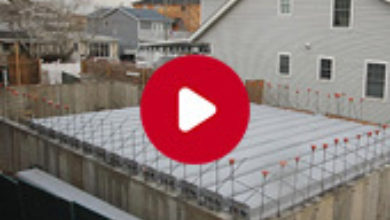
Watch now: Hurricane-strong Home Timelapse
Working on an Insulation Project?

Contact us to request a sample and learn more about distribution options to purchase Neopor®.